Thursday, 29 January 2015

Smartphones


Smartphones. Everyone has one. The technology involved boggles the mind if you put too much thought into it. Not too long ago computers looked like this.

And even then about all you could do on them was play Solitaire and do long division. Nowadays, your average toddler can do anything from play a cheeky game of Candy Crush, to manage their bank account, to remotely controlling their central heating at home. That's right, the average toddler.

The value we place on the versatility and convenience of having these tiny gadgets in our back pockets is immense. I have friends who buy every new instalment and marginal upgrade that the companies decide to make. “But look Gareth, the menu layout has been redesigned; this is going to change my life!” And I am certain you know similar people in your life, or are one yourself. The industry in the smartphone market has exploded. Samsung, Apple and Microsoft are all riding this train to colossal profits. Ever heard of Huawei? They’re a Chinese company with some new phones being released in the UK, but they are the largest telecoms company in the world.

Apple purchases in excess of 50% of the world’s total production of sapphire to provide for its new screens.

What am I going on about with all this? Well, smartphones are a new phenomenon, but they are not going away anytime soon. This is why I wanted to give you some insights into what the little box in your left pocket is doing to your life, and also some interesting facts you can use to impress your colleagues over lunch.

Using smartphones dramatically increases sensitivity in the tips of your fingers. Find out a bit more about it here. The study seems to show that after a certain period of using a phone, the piece of your brain responsible for the sensory nerves in your thumb and fingers become dramatically more sensitive. So maybe using your phone is affecting your brain, but probably not cooking it like your Gran warned you.

You’ve heard of Athletes Foot and Tennis Elbow. Well how about Texter’s Neck?  Did you know your head weighs 12lbs? (average) That’s equivalent to the green bowling balls you find in your local bowling lanes. Now imagine the length of time that you spend hunched over staring gormlessly down at your phone waiting for twitter to Load New Tweets.  The study shows just how much strain you are putting on your cervical spine by spending so much time on your phone.  Up to 60lbs worth of strain, depending on how deeply you incline your head. Maybe try and keep it at eye level?Credit: Dr. Ken Hansraj M.D.

Ever have trouble sleeping at night? Tossing and turning because your mind is still active, thinking about plans for the next couple of days? Well we can blame that one on your phone too. The act of looking at a screen is a remarkably taxing one for your eyes to perform. Just the simple act of scrolling down your Facebook wall is a highly mental activity, and is something that preoccupies a great deal of attention. To an even greater extent, relaxing by playing a simple game like Clash of Clans is an activity that requires a whole lot of brainpower.

This is the opposite of what you want to be doing before bed. In an ideal world, you would stick on some smooth jazz or whale song, depending on preference, and relax in a semi-meditative state repeating the word “Ohm” to yourself until your mental activity has ceased, from whence you fall into a blissful sleep carried on the wings of angels. Is this going to happen every night? Without a doubt, no. What you can do to help yourself out before going to bed, is maybe relax downstairs on your phone, then when you are ready to go to bed, toddle up stairs and put your PJs on, brush your teeth, and get some multiple of 40 winks without poring over your phone.

So the smartphone is using its powers for evil, for the most part right? All part of the plan, so that when Skynet rises we will all be an oversensitive, ill-rested and chronic back pain suffering lot who lack the vim and vigour to resist the machine uprising.

We all know the surface benefits of having a phone. 24hr access to information wherever you are, an ability to contact everyone you know in a matter of seconds, distracting yourself in important meetings, and all manner of other tasks.

Wondering how this is all relevant to the library? Wonder no longer! With a flawless segue, here are a couple of links about services you can access on your phone.

UptoDate has a great mobile site just waiting for you to scroll down.

http://www.scoop.it/apps is well worth a look. I told you about Scoop it a couple of weeks ago, but the content curation is a really valuable feature and a novel approach to information access.

See you next time!

Friday, 16 January 2015

This Blog Will Save Your Life!

As long as you have some kind of heart defect that can only be cured by reading this blog. Convenient, right?

This week’s blog is about headlines. More specifically about headlines in health and medical articles, and is a companion piece to the article from last week.

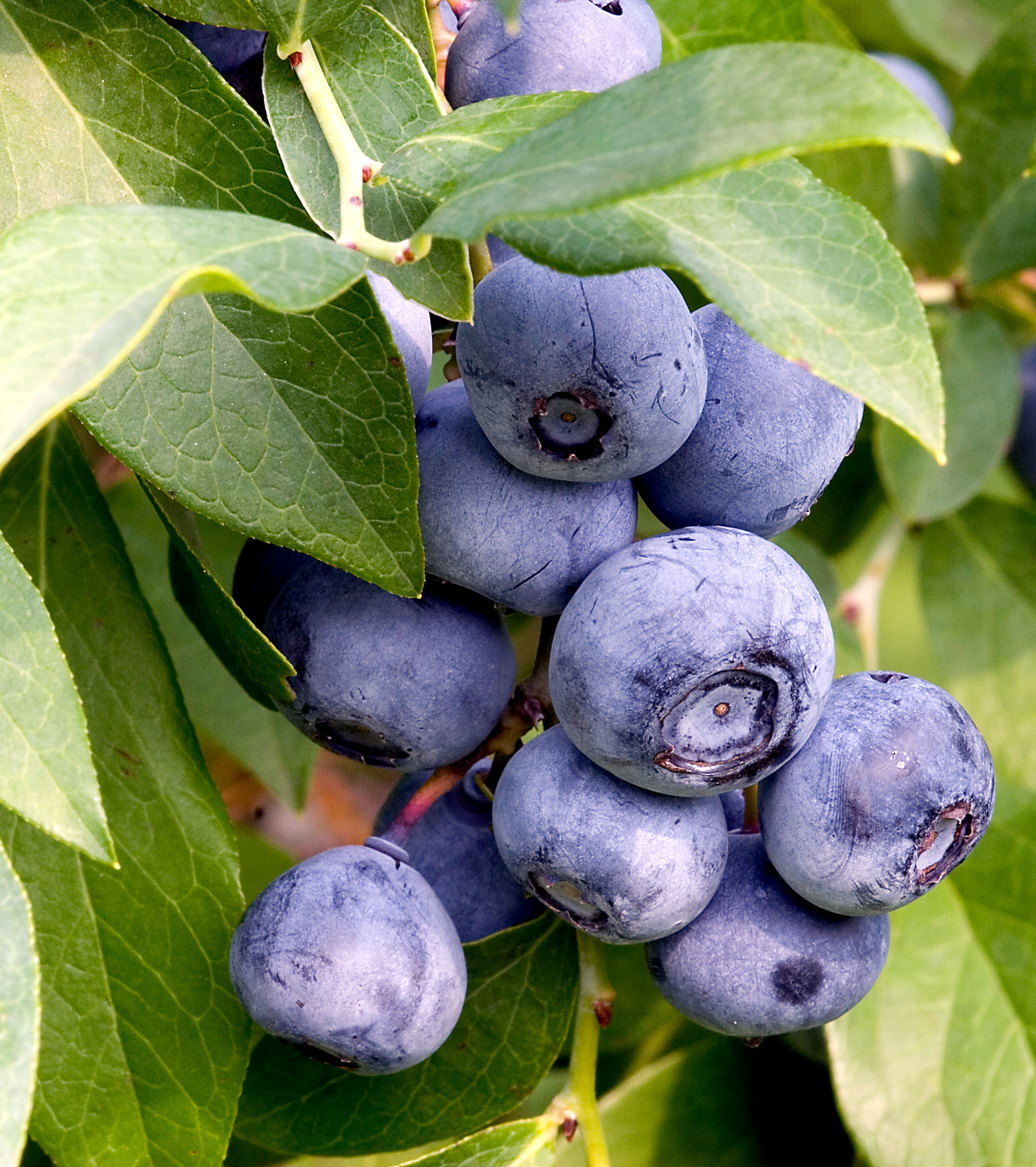
We all know the press loves to sensationalise stories. Remember the craze about superfoods I talked about last week? How pomegranates and blueberries cure cancer, stop child abuse and fight fires, all while rocking a James Dean slicked back hair do?

Maybe not in so many words, but in 2013 the world went a bit doolally* over these unassuming constituent parts of muffins and smoothies.  The studies so far failed to figure out why exactly this was, especially regarding Blueberries, as they contain no particularly high or dense quantities of nutrients or antioxidants. (http://nutritiondata.self.com/facts/fruits-and-fruit-juices/1851/2)


So while the media went a bit mad with articles like “Superfoods Fight Cancer” really all that was happening was they wanted you to click on their article or pick up the paper. Had you done so, you would have found dubious sourcing and abbreviated quotes to sensationalise otherwise quite well balanced opinions.

Of course it didn’t take long until people like yours truly were shouting about the over hyping and misleading headlines, before we got this from the Daily Mail (http://www.dailymail.co.uk/health/article-2598694/Why-called-superfoods-BAD-Nutritionist-says-kale-send-thyroid-haywire-quinoa-irritates-gut.html)

Anyway, that’s quite enough links for one article, but I think you get the idea. Linking to last weeks article, make sure you see through the headline glare, and read what the article actually says, and who it sources. Before you decide to cut Kale totally out of your diet in case your Thyroid gets a bit antsy, consider looking in a bit more depth at what proof the Daily Mail cares to provide you.


The reason I wrote this is because I wanted to bring this one to your attention. It’s a light-hearted piece by the Behind the Headlines team at NHS Choices, and I recommend giving it a read.

This is quite a short one this week, but if I went any further I might be impinging on the intellectual property of NHS choices, and woe betide he who does such a thing.

I hope these last two articles were a bit more enlightening, and that you are now armed with the knowledge to think a bit more critically about the headlines. And maybe not believe everything you read. Except this blog. You should treat this as gospel.
*Interesting fact about the expression Doolally. It originated in early 20th centuryBritish India, and refers to Deolali Transit camp, where soldiers being sent home would wait for a ship back to ol’ Blighty. The waiting times were severe, and so stemmed the phrase Doolally Tap, to meaning crazy waiting. (Doolally being a corruption of the name Deolali, and tap from the Sanskrit word “tápa” meaning fever.) Don’t say I never teach you anything.


AMR- What, Who, When, Where and How?

What is AMR? Well, I’m glad you asked. If you hadn’t I probably would have assumed I didn’t need to write this. AMR is fancy jargon for AntiMicrobial Resistance. It may be something you have heard about in the news, and should you be clinical staff, on the job. It refers to how the bugs are winning the fight.

Since the discovery of Penicillin, humans have used all kinds of cultures to stave off infection by the trillions of little gribblies all just waiting to force you to take a day off work. It is in fact a hard-pressed conflict. As we go on using them, many bacteria will develop an immunity or resistance to certain types of antibiotic, similar to how you are likely immune to Smallpox. (Thanks Edward Jenner!)

This provides quite the challenge for the brainy folk who go about their daily jobs trying to find new weapons in this ongoing struggle. Miracle drugs don’t grow on trees! Or maybe they do, but there are a lot of trees to check.
So is that it? Just wait for the inevitable tide of Bacteria to come kick down your front door and abscond with your spouse, all while you sit there blowing your nose?
Ridiculous hypotheticals aside, there are several things you can do as an individual to curtail the spread. You never know, if everyone starts doing this, maybe it’ll have an impact!

Some decent guidelines to follow are:

·         Cover your mouth when you sneeze. For one, it’s just polite. Second, logic dictates that if a strain of bacteria infects less people, it will have less likelihood to be subjected to a gauntlet of antibiotics, and will therefore have less of a chance to develop immunity.

·         Follow basic Infection Control guidelines. You should be doing this already, I’m just pointing out there are reasons beyond NHS officials having a thing for clean hands.

·         Do not save antibiotics prescribed to you by your doctor as part of a course “for next time.” That isn’t how it works. If you don’t finish the course, the antibiotics don’t do their job properly. Antibiotics need to reach a certain level of saturation in your cells to have any effect. Bacteria that survive the course because the levels of drug are too low to kill them, have an opportunity to develop resistance to it. Don’t be Patient Zero of the dreaded Hedgehog Flu Outbreak of 2015. By “saving it for next time” you are undermining the whole reason to take the course in the first place!

·         Do not use antibiotics without the advice of a clinician. Those drugs you saved from last time may not be tailored in the correct dosage and quantity to appropriately attack the particular infection you have acquired. Let the doctor and pharmacist do their job. They probably know better than you. They get paid to do it for a living. And if you are a doctor? You should probably know better.


Right, well that’s that bit done with. Believe it or not, that all came from reading a couple of books on the topic, and consulting various publications by various institutions rather more qualified to declaim on the matter than I. They can all be found down at the library, as we are creating a display on the topic! I’ve even marked the relevant sections in a number of books hand-picked by a librarian for your convenience! We’re good like that.


Hope to see you soon, and I leave you with this little joke on the history of medicine.

2001 BC
Here, eat this root.
1000 AD
That root is heathen. Here, say this prayer.
1850 AD
That prayer is superstition. Here, drink this potion.
1920 AD
That potion is snake oil. Here, swallow this pill.
1945 AD
That pill is ineffective. Here, take this penicillin.
1955 AD
Oops... bugs mutated. Here, take this tetracycline.
1960-1999 AD
39 more “oops”... Here, take this more powerful antibiotic.
2000 AD
The bugs have won! Here, eat this root.

Friday, 9 January 2015

Musings on the New Year


January. A time of reinvention, of crowded gyms, streets filled with joggers and smoothies that taste “all right”, but only because it’s better than yesterdays.

I touched on the health craze that annually sweeps the nation this time of year briefly in my last article, but I wanted to go into a bit more depth this week in light of a pair of articles my colleague very kindly pointed out to me.

These articles are from the NHS Choices website, which I heartily recommend as a goldmine of good and grounded information on all manner of topics. Find it here.

I despair at what comes at the turn of each year. My twitter feed is inundated with various celebrities and public figures all promising to be better people and eat less junk food  My Facebook wall is similarly burdened with old schoolmates swearing off Alcohol/Cigarettes/McDonalds (other fast food chains are available)* only for me to see them outside the pub later that week with a cigarette in one hand and a pint in the other.

This rant is not aimed at making people feel bad about their New Years Resolutions, and if you are taking part in the Dry January challenge, or quitting smoking, and used the New year as a starting point then well done, and I believe you are more than capable of doing it. Remember, if you need help, there are organizations set up to help you quit smoking and reduce alcohol intake.  And you can always help others while doing it! https://registration.dryjanuary.org.uk/

What I want to express though, and the point of the article, is that there are a myriad of schemes, plans, mantras and “diets” that are based in dodgy science at best. The article my aforementioned colleague showed me was penned by Dr  Alicia White, who shared the same concerns as me.

She was concerned that most people do not know how to properly assess the legitimacy of a particular piece of text, be it a research paper or newspaper article.

The problem we face these days is oversaturation of the news. You can’t possibly read every piece of news that meanders its way through over your breakfast table, there simply isn’t time.  Just as you are unlikely to research into the minutiae of every diet you consider. Many people pick one based on a celebrity who lost a bunch of weight, or a “Superfood” like flavour of 2013, the blueberry.

The article I refer to explains this in a much more concise and enjoyable fashion than I will here, so the link is right here: http://www.nhs.uk/news/Pages/Howtoreadarticlesabouthealthandhealthcare.aspx.

Please give it a read, it’s well written and convincing, and provides invaluable information about several extremely relevant topics.

I’d also like to qualify this article by mentioning that by no means should you write off all diets and healthy living plans. As an example, I have been adhering to the 5:2 diet mentioned in the article above. A “fad” diet by definition, it suggests you reduce your calorific intake on two of every seven days to around 500 calories. Remember, I am not advertising this diet, but I would like to mention that I went into it with eyes open, and sceptical myself, which I believe is key to anything run by a for profit organisation. I did my research and found the scientific basis to it sufficiently convincing that I was prepared to try it. I was helped by my Dad’s success at it, and have been using what is effectively an altered eating plan for around 9 months. I’ve lost 3 stone now, and feel good. However, rather than risk this turning into a Weightwatchers Testimonial, I acknowledge that a good part of this weight loss is down to me starting to exercise more, drinking  less beer after leaving Uni, and that willpower isn’t just the force that Prince Charles' son can exert.

Why is this all relevant on a library blog? Well, for one thing, I wanted to write an article about this, and saw my chance when Helen the aforementioned colleague showed me the relevant source material. The other reason is that as a library, our job is to make knowledge more accessible. However, there is a lot of knowledge out there, and we can’t sift through the whole lot to ensure it is all pertinent and trustworthy for each individual. The referred to article lets you critique what you are reading for yourself.

 Knowledge is power, and we want to empower you.


Sorry for the slightly more serious article this week, but some topics don’t lend themselves to wanton tomfoolery. We’ll be back to more fun and frolics next week!

*Oh wait, I don’t work for the BBC…

Monday, 5 January 2015

Merry New Year!


It’s finally over. Christmas and New Year are in the rear-view mirror, and Spring approaches ever faster.

After gorging yourself with various nibbles, snacks and tasty treats, going back to work must seem a bit of a drag, especially after you drank a few too many glasses of bubbly to see in 2015.


2015. Where has the time gone? This is the year Marty and Doc Brown travelled to in Back to the Future 2! I still am without a hover board though, and my clothes are disappointingly still not automated, to say nothing of the abolishment of the Lawyer.

So then, a new year means a new you right? Going to finally start that new fad diet, stop drinking all that beer/wine, and join the gym. Millions of people do it every year, and it goes the same for a vast majority of them. The first two weeks are fun and exciting, and then you remember that you actually enjoy a beer, that this fad diet is plain ridiculous, and the gym is taking up a bit more of your time than you previously anticipated.

Perhaps slightly more relevantly, that research article that you’ve been meaning to start for sometime, and the deadline looming ever closer is starting to be a cause for concern, or that technique you aren’t certain about, but it comes up so rarely that it’s ok to ask a colleague about it.

I wonder who could possibly help with that.

Readers of previous articles, and anyone familiar with rhetoric at all however, will jump to the conclusion that it may in fact be something that us lot down in the library can help with. Not help you drink less beer, but I’m sure we can find something to get you going on that indecipherable research topic, and provide clarity on the best techniques.

This article was less of a tirade on the benefits of the library, and more a chance for us at the library to say we hope you had a Merry Christmas and a Happy New Year. And hope you weren’t blinded by the fireworks in London. Better than my Catherine Wheel, I tell you that!
 
See you next time!

Friday, 19 December 2014

Electronic Learning. Welcome to the Future, We have flying cars!

Hullo!
 
This is the fourth article I am writing in as many weeks. So far the reception has been extremely positive, with a couple of people mentioning they liked the articles whilst in the library, and even a comment on last week’s article! Thanks Anonymous, you’re a swell guy/gal.

Reiterating the end of last week, please never feel afraid to get in touch and let me know about how you feel about this series. As the weeks pass I’d like to tailor it to what you want to hear about, and that can’t happen without me knowing what you like.

Big fan of the eye-candy in last week’s article? He’s married; I’ll have to check with his wife if you want more of that. Missed last week’s? Here it is!

Want more features? A quiz? I have a lot of useless knowledge, but then when I read quizzes on other websites they always seem lame. Maybe not.
Want dessert? Well finish your greens then young man/lady! It’ll put hair on your chest.

I think you get the picture. If there’s something you want me to ramble on about for about 400 words or so , let me know and I’ll try and fit it in.


So anyway, to todays topic. Electronic Learning Resources. (ELR)

ELR come in a myriad of forms. E-books, journals, online access, forums, apps, databases (Databi?)

We provide access to all of the above. Except Databi, which isn’t a word, let alone a service. We do have databases though!

As I have mentioned before, our physical journal collection is pretty expansive, giving you that book smell when you open any one of our 407 titles we have in the flesh. That’s not counting the online access you have when mucking about on Open Athens (our service provider). Anyone want to guess how many you get?

You’re very quiet, you need to shout at the screen, I won’t be able to hear you otherwise.

Ok, please don’t shout at the screen, especially if you’re reading from a computer on the cardiology ward.

The final total, including e-books comes to a mind boggling One Hundred and Fourteen Thousand, Four Hundred and Thirteen.

Oh my.

That looks like 114,413 in numbers.

And it costs you the princely sum of £0.00, payable in monthly instalments*

*APR 3.4%, sum payable within 12 months or your home may be repossessed


*Gasp*

Pretty good for nothing right? Come on down and see us on how you too can hold the wisdom of ages in your palm, and laugh like some kind of omnipotent being.


UpToDate!

That’s right, we subscribe to UpToDate, which is so good, it has capitalised letters strewn through the title.

I’ll wait for you to get up off the floor after swooning at this latest revelation.

Done? Good. Mop your brow, you look a state. Just kidding, you’re beautiful. All my readers are as beautiful as my own non-existent children.

Anyway, tangent aside, I guess I should tell you about UpToDate (it’s a pain capitalising every other letter in that word) UpToDate is a clinical evidence based search tool that can be used by clinicians and hospital staff to find quick and relevant information on any one of 10,000 topics and counting.

The way it works is the company running UpToDate have a crack team of experts working round the clock researching the methods that have the most clinical evidence to back them up. Want to find out techniques for amputating someone’s leg? They’ve done the research so you don’t have to.
The best thing about it though, is certainly the fact it’s evidence based, and current. No more searching through dusty tomes for the most potent rum to administer when performing an amputation, although if you’re still doing that, I wonder that they let you have a stethoscope.
We recently performed a survey which many of you may have participated in. Here is some of the anonymous feedback that we received.

“(UpToDate) provides key learning in one site allowing improved efficncy of my time”

“An invaluable resource for this Trust. Each of us should probably use it even more, it is a great resource particularly for areas outside one's own specialty and to check other matters. It is not advertised sufficiently. Do all the junior staff know of it? It would be as serious loss of we did not have it.”

So pretty positive. I only chose two because I don’t want this article to go on too much, but as the second reviewer suggested, it really is a powerful tool in the medical professional’s arsenal. If you don’t use it already, try giving it a look, you can find a direct link on the SDH intranet homepage on the right. If you do use it already, great!  Maybe recommend it to your colleagues. They will thank you for it. And then you get to be that person who knew about something before it was cool. Everyone loves that person.


That’s all for this week!


Until Next Time…

Friday, 12 December 2014

Blog Article 3, This Time It's Personal


So here we are again. What should I talk about this week?

While there are several topics I wanted to talk about, I have decided for one more week to talk about the great things we do.

Friday the 28th of November was the Striving for Excellence awards, which all the library staff attended (except the new guy) and all remarked it was brilliant seeing the innovation, effort and quality of care the staff of SDH make part of their everyday jobs.

A link to the full breakdown of the awards and their winners can be found here.

Our very own Liam Thornhill (Library Assistant turned IT Trainer) was a well deserved recipient of the Living the Values award, which he earned by being everything you might want someone helping you to be. Now I don’t want him getting a big head, but he’s been doing a great job here for 4 years, and in filling his role, I am constantly asked “oh are you the lovely young man who helped me last time I was in?”

Now, I am a lovely young man, but I’ve got my work cut out for me if I hope to follow in his footsteps.


Scoop It!

I also want you to take a look at the Healthcare Library’s Scoop.it page. It is updated daily with all the latest news from around the web. The two topics curated on there are SDH news which is a delight to read about all the good work you folks are doing, and a healthcare app page updated with information about all the latest apps that can help make clinicians and their patients lives easier/more contained within their smartphones.

Scoop it is an underused tool that I had never heard of before I started work here, but I do recommend checking it out. Think of it more as a Twitter where you follow topics relevant to you rather than people who post motivational quotes and pictures of kittens. Not that kittens aren’t relevant, but you get my gist.

Back on display!

November in the library was “Self-Care Month”. In conjunction with the week running the 17th to the 23rd of November we have had a display of tips and tricks to keep you jolly and healthy throughout winter. Although that display is gone now, you can still get information on the NHS choices website.

Taking its place once more by our glorious self-issue machine is the Mood Boosting Book display. Featuring Works by Terry Pratchett, Victoria Hislop and James Bowden, we have a range of books that will cheer you up on a dismal British December evening.


Healthcare Current Awareness Bulletins

Our resident librarians remind me of Santa’s elves. Not because they are short and have high pitched voices, but because they spend a good portion of their time working on Elfcare , sorry Healthcare Current Awareness Bulletins.

These Bulletins are tailor made with the latest guidance and research to help keep you up to date with the most recent developments in the field of your choice. Want to know more about Urology? Who doesn’t?! You can find a focused Bulletin on the topic by simply selecting your topics and emailing them to us at Library.Office@salisbury.nhs.uk.

To save you unnecessary clicking, and because I’m good like that, here is the list of topics you can get updated with.

Acute and Critical Care                              Occupational Health

Alcohol,                                                        Ophthalmology

 Burns and Plastics,                                    Orthopaedics

 Cleft Lip and Palate,                                  Paediatrics

 Dementia,                                                   PCI/Cardiology

 Dermatology                                             Pharmacy

Diabetes/Endocrinology                           Public Health

End of Life Care,                                         Rheumatology

Fertility,                                                       Spinal Cord Injuries

Infection Prevention/Control                  Stroke

Maternity Care                                          Urology

 Neonatal Care                                          Wound Care

Neurology                         

Then your little bundle of research will turn up in your inbox (stocking) periodically all wrapped up and ready to go. See? Elves.
 

So there we are. Another week, another series of flippant remarks and bad irrelevant tangents.

I would love to know what you guys think about the blog, and if there are any topics you might be interested and want to hear me discuss in future articles please leave a comment in the comments section.

Equally if you hate what I’m doing with this blog and only reading in a fit of self-loathing, let me know in the comments. This is the internet and if someone isn’t calling the author rude names on a public domain it just feels a bit weird…

 
Also, you should tell all your colleagues to have a look. It’s nice to share, especially at Christmas!


Until next time…

Tuesday, 2 December 2014

Librarians. What on earth do we do?


So they let me write another one. Phew…

This week, now that introductions are out the way, and you know where we are, I want to talk about the jobs that the staff at the Healthcare Library do.

But wait Gareth, don’t you all just sit around reading books and tell people to “shhh” for a living?

Well in a dream world, that would be the plan, but too much shushing starts to wear on the throat after a while, and we all feel like this might be a misappropriation of Trust resources. Instead we carry out tasks that help keep the library running and most importantly, keep access to the resources you guys need available and easy to find.

Sounds easy right?

So, let’s break down our friendly staff into their job roles shall we?

These would be the Librarians and Library Assistants.
That didn’t take long.

Your faithful Library Assistant team at this particular Healthcare Library consists of  myself (Gareth) and my esteemed colleague Anne-Marie Fitton. Our particular responsibilities cover two separate sections of our physical and online resources.

 Anne-Marie is the Keeper of the Books. Not actually her job title but it sounds more dramatic... As well as the myriad of other tasks she performs in her role as our Library Office Manager, she is also the channel through which all our inter-library loans take place. She is an integral cog to our service, and resident expert on all things.

 (I didn’t miss a bit out here, she knows everything)

If you need a book and we can’t provide it from our stock, she can track it down. If you have any queries about the library service, she will know the answer. If there's something strange in your neighbourhood... You should probably call Ghostbusters, but Anne-Marie will give it a crack!

Although I’m still learning, my role is managing the journal stock both electronic and in physical form. This amounts to looking after the collection we have, and adding to it when possible. I’m also responsible for responding to other library’s loan requests, as well as making sure you have a pleasant visit and any issues you encounter are resolved quickly and effectively. I also write the Blog, state the obvious, and run the ScoopIt page.

We are both full-time, so if you are popping in on a weekday when we are staffed, you can be sure to find one of our delightful visages waiting to help.

The Librarians down here are Jenny Lang, Caroline Thomas, and Helen Clemow. When you think librarian, you think some old battle-axe peering down the length of her nose, tutting just loud enough to shame you as you remonstrate what a mistake it was to come to the library whilst still being an organic being that requires breathing to live. Shame on you.

I was apprehensive of having to work with such characters, as I too need oxygen to live, and was beginning to puzzle out a way of somehow oxygenating my blood through some kind of intravenous system. (Patent Pending)

Then I turned up in the library and had to scrap my design. They were extremely tolerant of gas breathing carbon beings! In fact, since I’ve been here I’ve not heard a single tut, remonstration, recrimination, scolding or a haughty sigh!

The librarians are really keen to get the best experience possible for your visits, and keep you coming back. After all, knowledge is power, and we want to empower you to do your job as effectively as possible. That’s our job.

No longer in the dark ages are we. Books are not closely guarded as means of keeping the riff-raff in line any more.

That’s all very well, but what can the Librarian do for you?

A good question and one that cannot be answered in the limited word count available to me. To see a full list of what we can do, click here.

The service that I wanted to tell you about, and possible one of the most valuable services this library provides, is the Literature Search. A literature search is a very simple thing to request. Simply fill in one of our forms at our website with as much detail as possible, and our Librarians will scour the internet and databases, finding up to date and relevant information, fully referenced and ready to go! Time saving extraordinaire!

So once again, thanks for reading and I hope this will inspire you to let us help you do less work.
Until next time…


New Books!

De Swiet's medical disorders in obstetric practice
Powrie, Raymond O
WQ220
Introduction to research
DePoy, Elizabeth
WB25
Communication skills in health and social care
Moss, Bernard
WLM816
Critical reading and writing for postgraduates
Wallace, Mike
L125
Nursing research
Munhall, Patricia L.
WY20
How to write a paper
Hall, George M.
Q50
Risk assessment in people with learning disabilities
Sellars, Carol
WM805
The good research guide
Denscombe, Martyn
HM20
Minor injuries
Purcell, Dennis
WD458
Innovating for patient safety in medicine
Lawton, Rebecca
WA55
Disabling barriers - enabling environments
Swain, John
WB600
Essential knowledge and skills for healthcare assistants
Rawles, Zoe
WY120
Research methods for clinical therapists
Hicks, Carolyn M.
WB25
Succeeding in literature reviews and research project plans for nursing students
Williamson, Graham R.
WY20